


How to Naturally Help a Leaky Gut

Updated: Nov 4, 2023
By Rustina

What is Leaky Gut? Why do I need to worry about it?
Have you ever eaten something that you have always loved, but all of a sudden, you feel sick every time you eat it? All of sudden, foods you love are like kryptonite to your stomach leaving you bloated, gassy, constant headaches, frequent skin rashes, or even joint pain?
You may have a leaky gut.
When the lining of the intestines is damaged by parasites or toxins (or food particles that our body has determined is toxic - gluten, dairy, nuts, soy, etc), it can allow tiny bits of these and other particles to escape. This can lead to unwanted substances sneaking through the linings into the blood vessels, lymphatic system, or surrounding tissues.
This "leaky stuff" then can go on to cause other issues from allergic reactions, autoimmune reactions, and inflammation.
It isn’t the end of your story though. You don’t have to settle for dealing with the pain forever or give up your favorite foods. Consuming a healthy and clean diet that supports the gut lining and reduces inflammation so the damaged areas can close the gaps, encourage healthy elimination, and have good fluid movement that will allow your body to return to its happier state.
Many people have found that the food intolerances they suffered before no longer bother them after they have taken care of their gut. They have slowly reintroduced the food back into their diet without the pain!
So how does it work?
Under normal conditions, the entire gastrointestinal tract has a semi-permeable barrier, this allows the smaller molecule nutrients to leave the gut to be absorbed by our blood or lymphatic fluid. When the barrier, or gut lining, is damaged much larger molecules of any sort can “leak” out. The damage that causes leaky gut may be from inflammation, overgrowth of fungal yeast or parasites, lack of good bacteria, or striations in the lining (common with vitamin A deficiency).
Either way, these gaps develop between the cells in the gut wall allowing the entry of toxic material into the body that normally would not be in those locations.
Since so much of our immune system functions in the lymphatic system, the invading particles can easily be at the root of autoimmune conditions and strong anti-inflammatory responses.
While in our gut, things like proteins and other essential components are broken down to the useful pieces we need. When they “leak” out before their final breakdown, they may cause damage along the way such as when the body begins to create an antibody to these proteins.
This toxic material may go on to cause other issues in our bodies such as:
Food allergies
Allergies in general
Autoimmune issues
Fatigue
Thyroiditis
Irritable Bowel Syndrome
Arthritis
Lupus
Pain
Diabetes
Fibromyalgia
Raynaud's Syndrome
Bipolar and depression
Psoriasis and eczema
Further disruption that makes leaky gut worse is the use of NSAIDS, chemotherapy drugs, or low stomach acid. Stress and depression (mental or physical) can also have a big effect.
One of the big problems with leaky gut is the malabsorption that results from these gaps. Even if you eat healthier foods, many of the nutrients may be lost. Some of the commonly lost nutrients are iron (may present as weakness, dizziness, brittle nails), vitamin Bs (especially the hard to get B12), magnesium (fatigue, muscle pain), zinc (hair loss, eye problems), calcium (bones, teeth) and copper (low body temps, thyroid problems).
One reason of many for why it affects our moods and can cause depression:
Our gut supplies about 95% of total body serotonin (1)! Serotonin is one of our body’s neurotransmitters that acts as a hormone delivering messages, modulating our moods, internalizing the concept of rewards, memory functions, cardiovascular function, bowel processing time, ejaculation time during sex, and bladder control (2). It also has a role in platelet aggregation and the linking of cellular proteins, both of which would result in slower healing and even may appear as cartilage damage that does not repair itself. It is known as one of the 4 “happy hormones.”
So what can we do?
The first step has to be to stop hurting the gut lining. The second is to add support through a healthy diet and using foods/herbs that support build structure to damaged gut linings.
While adding the “good helpers” is very important, reducing the “bad” ones needs to happen.
1. Remove as many inflammatory foods as you can as well as any foods you know you react poorly to:
Grains
Nightshades (sorry tomato lovers)
Dairy
Heavy amounts of nuts, legumes, and seeds
Alcohol
Coffee
Heavily processed vegetable oils, seed oils, and sugars
Artificial sweeteners and additives
Basically, anything overly processed for a longer shelf life. Look for foods that are whole, fresh foods, or processed in a more bioavailable form (dried foods, herbal extract).
These may not need to stay permanently gone, just until more healing in your gut has taken place. Many people find their favorites are ok to return in a few weeks to months.
2. Special note to avoid alcohol
Alcohol has been shown to increase intestinal permeability (6). It breaks up intestinal cell gaps, disrupts gut microbiomes, and is inflammatory.
3. Avoid NSAIDS (such as Ibuprofen, Aleve)
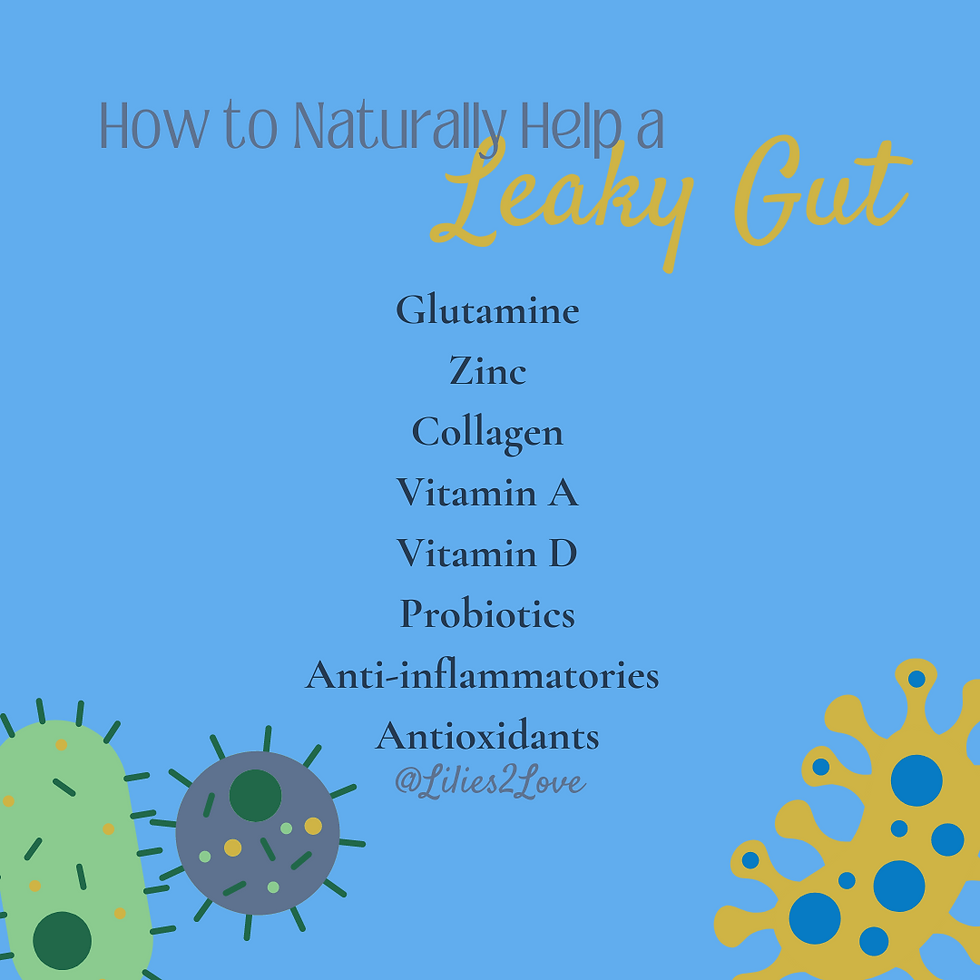
Add these important nutrients:
Glutamine is the most abundant amino acid (a building block of which all cells are made) is used in the gastrointestinal tract for healing and repairing (3). This is made naturally in our bodies, but can be supported with supplements or a good intake of eggs, beef, and tofu.
Zinc is essential for intestinal repairs and absorbing nutrients.
Collagen is a protein that makes up all tissue cells.
Vitamin A is very important in the lining without a good supply, linings with striate (4). It is also important for IgA which has a big role in the functions of the gut from the lining to gene expression to a healthy gut microbiome (5).
Vitamin D is also quite critical for supporting IgA function and restoring the immune system (literally every immune cell has a vitamin D receptor; it is crucial for good immune function as well as so many other functions).
Probiotics: Lactobacillus casei and bifidobacterium are great places to start. Eating healthy fermented foods are, in my opinion, better than supplementing. Yogurts and Kombucha are great starters if you are new to fermented foods.
Foods that are anti-inflammatory and antioxidant are very helpful for reducing damage.
Herbs and Foods that Support Gut Healing
Cloves
Calendula
Turmeric
Marshmallow Root
Lemon Balm
Oregon Grape Root
Dandelion
Slippery Elm Bark
Ginger
Cinnamon
Garlic
Fennel Seeds
Milk Thistle
Watermelon
Oysters
Kiwi
Bone Broth
Supplements that I recommend:
Gut Health Oil - Coconut oil infused with cloves and calendula mixed with pumpkin seed oil) Anti-parasitic, antioxidant, anti-inflammatory, pain relieving, wound healing, antibacterial, antifungal, reduces GI infections, and many nutrients that help.
Cod Liver Oil - (vitamins A, D, and Omegas also are helpful for the gut) anti-inflammatory, brain health, heart health, wound healing including gastric ulcers.
Turmeric and Black Pepper Caps - anti-inflammatory, antioxidant, and helps with wound healing
Super Foods Powder - Antioxidant rich, anti-inflammatory, vitamin A, and many other helpful nutrients
Liver Love is an extract of Turmeric root, Milk thistle seed, Dandelion root, Peppermint leaf, and Black pepper.
Marshmallow root such as in Cough B Gone is also great for healing the mucosal linings.
Slippery Elm, Ginger, and Fennel Seed from Mountain Rose Herbs


Comments